

Telehealth vs in-person care comes down to what needs to be assessed: telehealth works well for many conversations, record reviews and follow-up visits, while an office visit adds a hands-on examination, procedures and immediate testing.
Some concerns need both, and the right choice depends on your symptoms and what the clinician needs to assess, not simply convenience.
This guide explains what each setting can assess, how Florida location, identity and lab testing work remotely, when in-person or emergency care is needed and how to prepare for either visit.
| Clinical task | Telehealth can often support | In-person care may add or become necessary |
|---|---|---|
| History and symptom timeline | Detailed interview, medicine reconciliation and record review | Collateral history or immediate examination when the story is unclear |
| General assessment | Reported symptoms and home readings | Blood pressure, pulse and other measurements collected by trained staff, plus a fuller examination |
| Laboratory planning | Orders, prior-result review and follow-up discussion | Same-day collection or testing unavailable remotely |
| Hormone evaluation | Symptom context, fertility goals and interpretation planning | Examination of a mass, marked asymmetry or another physical finding |
| Weight-related care | History, home measurements and laboratory review | Equipment-based assessment or examination when clinically important |
| Urgent symptoms | Triage and direction to the proper setting | Immediate examination, imaging, monitoring or emergency intervention |
| Procedures | Preparation and follow-up in selected cases | The procedure itself and hands-on aftercare |
In this article
Which Health Concerns Suit Telehealth Best?
Telehealth often suits concerns where history, lab results and follow-up drive decisions, such as hormone care, weight management, medication reviews and many sexual health questions.
Concerns that depend on touch, imaging or urgent assessment, such as a new lump, severe pain or chest symptoms, are better served in person or through emergency care.
What telehealth and office visits can assess
What stays the same in either setting?
Licensing, consent, documentation and privacy duties apply in either setting. The clinician must identify you and collect enough information to assess the concern.
The standard does not become lighter because the encounter is remote. Florida law requires remote clinical work to remain consistent with the provider’s scope and the prevailing professional standard for comparable in-person care.
A clinician can still say that more information is needed.
What changes when the visit is remote?
The information channels change. The clinician can listen, ask follow-up questions, review uploaded records and discuss results. A connected device may contribute measurements when its accuracy and provenance are suitable.
The clinician cannot palpate an abdomen, examine a testicular lump, perform a rectal examination, obtain an immediate electrocardiogram or complete a procedure remotely. Connection quality and privacy can also limit the exchange.
Those limits should be named, not hidden.

No format is universally sufficient.
Is a telehealth consultation enough to establish care?
Sometimes, but the answer is condition-specific. Florida law permits a patient evaluation through telehealth and does not impose a separate in-person examination when the remote evaluation is sufficient for diagnosis and treatment. Sufficiency is the controlling word.
An intake form alone cannot reproduce a live clinical exchange. During a live consultation, the clinician can test the timeline, clarify contradictions, assess understanding and decide whether records or tests are missing.
Payment or scheduling does not make an evaluation sufficient.
Florida location, identity and laboratory testing
Why does patient location matter in Florida?
Healthcare is treated as occurring where the patient is physically located during the encounter. That determines which jurisdiction’s licensing and professional rules apply.
Atlas HRT coordinates care for adults located in Florida. A patient traveling elsewhere should disclose the current location before the visit, even when the home address remains in Florida. A prior relationship does not automatically authorize clinical work across state lines.
The clinician’s location does not replace the patient’s location rule.
How is clinician identity handled remotely?
Patients should know who is providing the clinical service and have a route for follow-up, records and urgent instructions. The clinician’s license and scope, not the platform name, authorize medical decisions.
Atlas HRT coordinates scheduling and logistics. Independent Florida-licensed physicians conduct the clinical evaluation and decide whether testing or treatment is appropriate.
Can laboratory work be coordinated through telehealth?
Yes. A clinician can determine that a laboratory test is clinically appropriate, review prior reports and discuss new results remotely. The specimen itself is usually collected at an independent draw site or another suitable location.
Collection conditions still matter. Timing, fasting status, acute illness, the assay and relation to any current treatment can affect interpretation. A portal number without its reference range and collection details may not answer the question.
The telehealth laboratory guide explains that workflow.
Do remote visits eliminate physical measurements?
No. Blood pressure, weight, pulse and other measurements may remain relevant. Home measurements can be useful when the equipment fits, technique is explained and unusual readings are verified.
A clinician may ask for repeat readings, a pharmacy or office measurement, or an in-person assessment. Self-reported numbers should not be treated as interchangeable with every professionally collected measure.
Objective monitoring follows the clinical risk, not the channel.
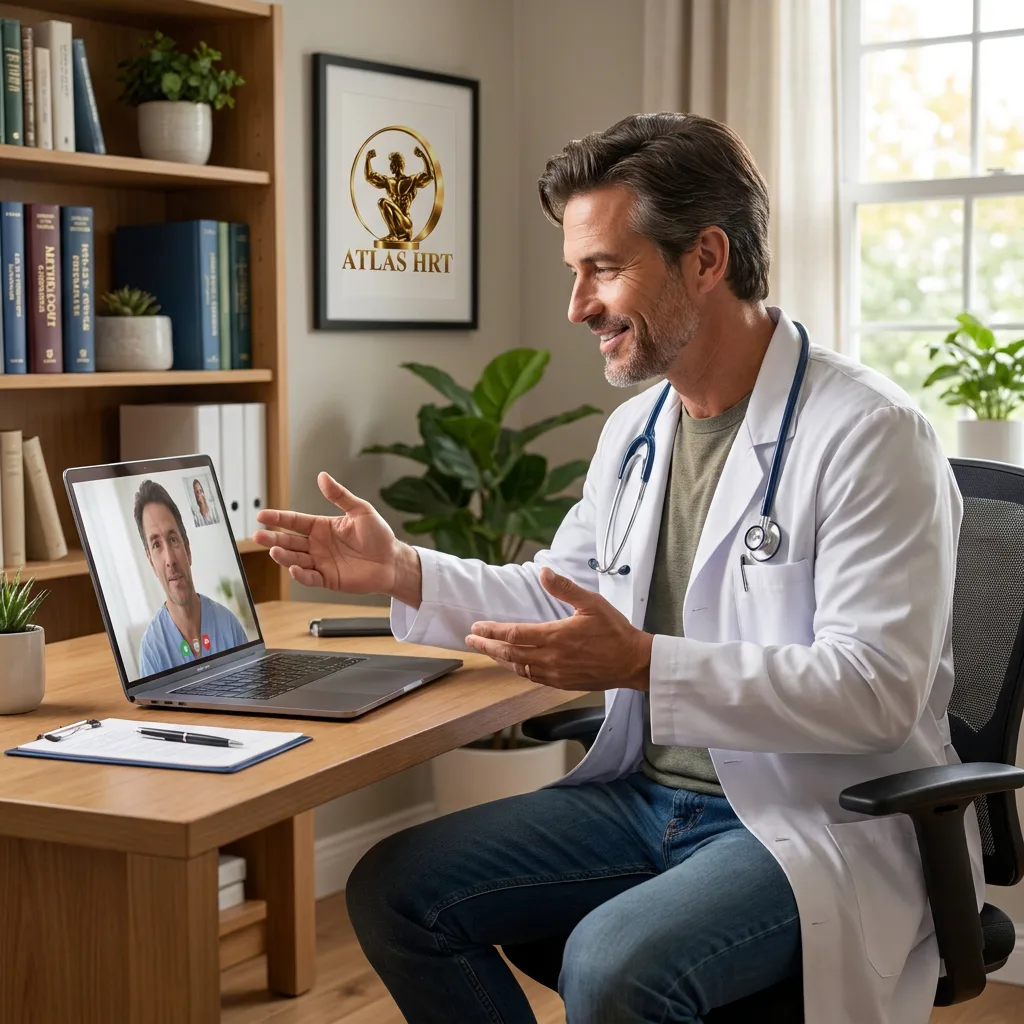
When in-person or emergency care is needed
When is an in-person examination more useful?
A new lump, focal pain, marked swelling, skin change, breast or testicular finding, neurologic deficit, unexplained abdominal symptom or suspected structural problem can require hands-on assessment. So can a condition whose diagnosis depends on palpation, auscultation, a detailed eye examination or equipment unavailable at home.
An in-person referral is not a failure of telehealth. It is one possible result of sound triage.
Sometimes the correct remote decision is to stop the remote pathway.
Which symptoms should bypass a routine visit?
These may require emergency assessment:
- Chest pain
- Severe breathing difficulty
- Fainting
- Stroke-like symptoms
- Major bleeding
- A serious allergic reaction
- Sudden severe testicular pain
- Another rapidly worsening problem
A routine telehealth slot should not delay time-sensitive care.
Telehealth can help direct a patient, but it cannot stabilize an emergency. Call emergency services or use the appropriate urgent setting. Atlas HRT does not provide emergency care.
| Situation | Best-fit setting |
|---|---|
| Reviewing symptoms, history and prior results | Telehealth often fits |
| Planning labs or discussing new results | Telehealth, with collection at a draw site |
| A new lump, focal pain or marked swelling | In-person examination |
| A finding that needs palpation or equipment | In-person examination |
| Chest pain, severe breathing difficulty or fainting | Emergency services |
| Sudden severe testicular pain or stroke-like symptoms | Emergency services |
Privacy, prescribing and preparing for a visit
How do privacy and technology affect the encounter?
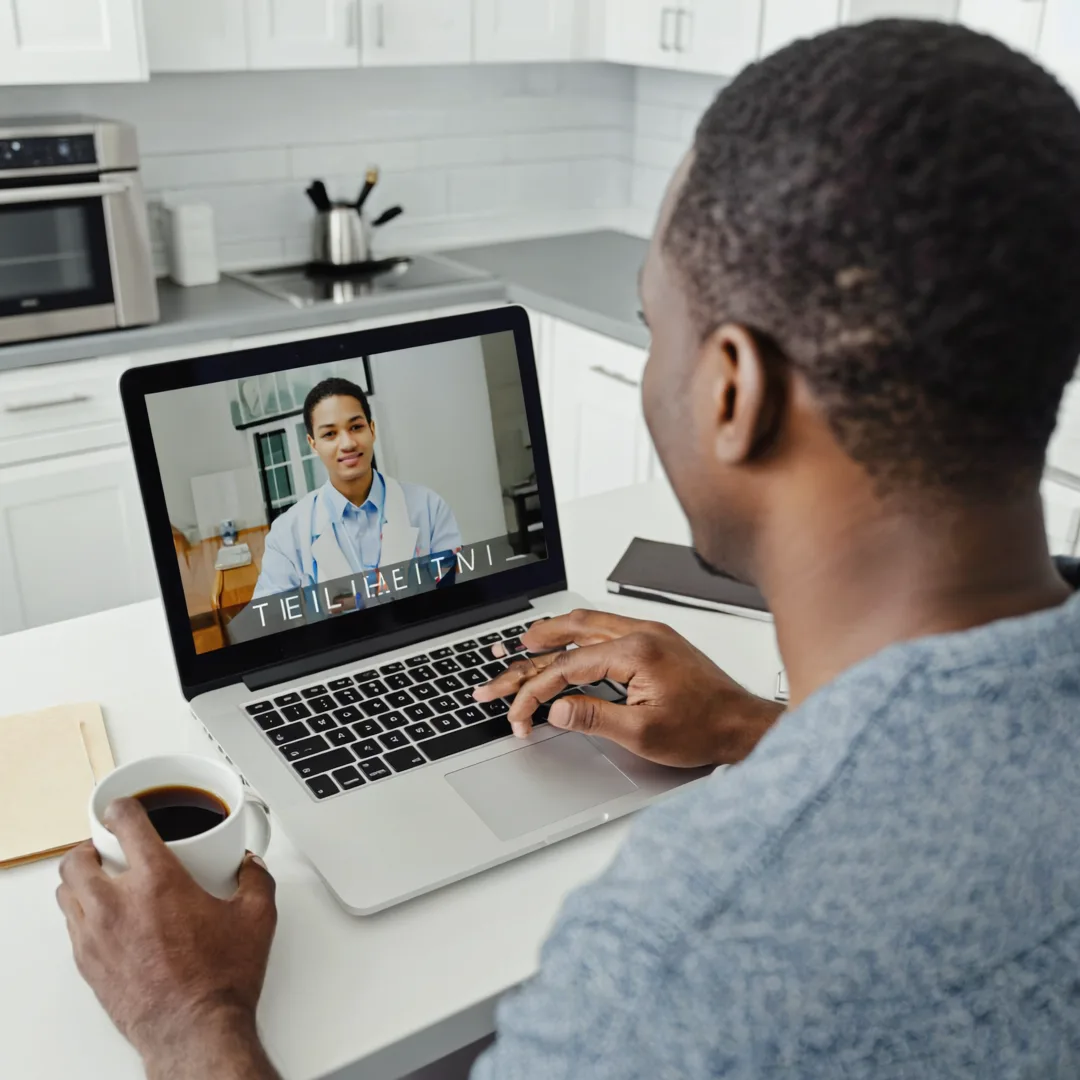
The patient needs a setting where sensitive history can be discussed honestly. A private room and a stable connection improve the exchange. The platform and the clinical practice must handle health information through suitable systems.
If the connection keeps failing, a finding needs a physical look, or another person answers without permission, the clinician may pause or reschedule. Technical access matters, but it does not override identity, consent or documentation.
Privacy is operational, not merely a policy-page promise.
Can a prescription be issued after telehealth?
Telehealth can support prescribing when the clinician completes an adequate evaluation and all state, federal and professional requirements are satisfied. It never promises a prescription, a particular product or continuation of a previous regimen.
The prescriber may request records, laboratory work, an in-person assessment or a different care setting. Atlas HRT does not sell or dispense medication. Through Atlas HRT, an independent Florida-licensed physician decides whether treatment fits, and a licensed partner pharmacy verifies and dispenses any prescription.
What about controlled medication?
Controlled prescribing adds federal and state requirements. The current federal temporary extension runs through December 31, 2026. Check the rules applicable on the appointment date.
The 2026 controlled-substance guide explains the current federal extension and Florida context. The clinician and pharmacy still apply the rules to the particular prescription.
Remote access does not remove the prescribing framework.
Can telehealth and office care be combined?
Yes. Hybrid care can use telehealth for history, education and selected follow-up while reserving office visits for examination, testing or procedures. The settings should exchange relevant information instead of operating as isolated episodes.
Patients can help by bringing medication lists, complete reports and visit summaries across settings. Duplicate tests and conflicting plans are more likely when records do not travel.
Coordination is a clinical safeguard.
How should a patient prepare for either format?
Write a symptom timeline, list all prescription and nonprescription products, gather reports with dates and reference ranges, and note relevant diagnoses, allergies and family history. For a remote consultation, choose a private space with a reliable connection and have identification and your current location ready.
For an office visit, confirm whether fasting, a specimen, clothing access or a driver is required. In both settings, prepare questions about uncertainty, alternatives, follow-up and warning signs.
Good preparation improves information quality, not eligibility.
We think the best care often mixes both. Telehealth removes the travel and waiting room for conversations that don’t need an exam, and a good telehealth service says so plainly when a patient needs to be seen in person.
Common questions
Is telehealth lower-quality care by definition?
No. Quality depends on whether the format supplies enough reliable information for the task and whether the clinician follows the applicable standard.
Must every remote visit lead to treatment?
No. The result may be education, testing, record collection, in-person referral or no treatment.
Can a remote clinician order laboratory work?
Yes, when clinically appropriate. Collection and interpretation still need suitable controls.

Atlas HRT Team
Reviewed by · Last reviewed September 2026Atlas HRT specializes in telehealth care for adults in Florida, including hormone, weight loss and sexual health care.
Sources
- Florida Statutes section 456.47: telehealth, Florida Legislature; accessed October 10, 2026
